The Daily Work of Living
Or, what to drink after a funeral

This weekend I accompanied my mom to the funeral of her longtime colleague and friend Mrs. Garner. I had spent time with Mrs. Garner one to four times a year, every year, since 2002. However I did not know her until the funeral.
The service was captivating. First, I was oriented to her childhood in Jamaica and her adolescence in New York City. Then came her young adulthood shaped by military service where two weeks after enlisting she realized the emperor had no clothes. But Uncle Sam had taken a shining to her so the only way out of that tribulation was years of going through.
It was evident that somewhere along the way Mrs. Garner had committed herself to the daily work of living and she had also decided that she was a poet. The former was expressed through her faith and the actions of community participation that this faith inspired in her. She was a deaconess in a church whose Virginia history spans 183 years. Beyond VA, she influenced ecclesiastical matters all over the Mid-Atlantic. So much so that when the inter-congregational usher committee (to which she also belonged) read condolences sent in from across their regional network, I lost track after the tenth — or maybe it was the twelfth — reading of mailed-in condolences.
At her home church it is her voice that welcomes attendees through speakers on Sunday. While eulogizing, the reverend made note that he had no plans of changing out the recording.
On the matter of her poetry: In 1996 Mrs. Garner was clocking-in as an accountant but even then, her closest friend at the firm spoke of her as a poet. She would later pivot to teaching middle school English and it’s in those halls where my mom, auntie, plus other educator colleagues came to form a close-knit crew of which Mrs. Garner was the resident poet for every occasion worth celebrating with an oration. When she wasn’t teaching, grading, writing, or orating, she was donating her own books and leading afterschool literacy programs. It was also mentioned in service that by the church’s count she had donated at least 600 of her own books while teaching public school. Everyone at her church knew her as a poet, she was tasked annually with the MLK-Day service reading to which she always brought a new original work to share.
Her only child, Steven, called her “my mother, the poet.” A lifetime ago, he gathered many of her works into a self-published collection that he designed, printed, and bound himself. He wrote a forward for this gift to his mother. One of Mrs. Garner’s best friends read the forward aloud at the funeral. While listening, I considered that it must have been her poetry as much as her faith that accompanied Mrs. Garner through the private hell of having attended Steven’s funeral ten years prior.
July 2025 was when I last saw Mrs. Garner on a visit to give her an at-home facial. She had just been cleared by her oncologist to wrap-up chemo. Remission was in sight until the finish line kept moving. I would later hear updates in passing from my mom but I wasn’t attentive to the pattern of things; now it’s July all over again and there I am at her friend’s funeral.
The casket is open, I’m looking at a body that was Mrs. Garner’s. While the body is empty the house of her Lord is filled with her spirit as attendees lament that she departed without writing down her famous hummus recipe. Laughter mixes with tears and becomes song from pew to pew while friends recall what it was like to travel with her all over the globe. In name, I’m at a funeral. In practice, I’m at a conjuring.
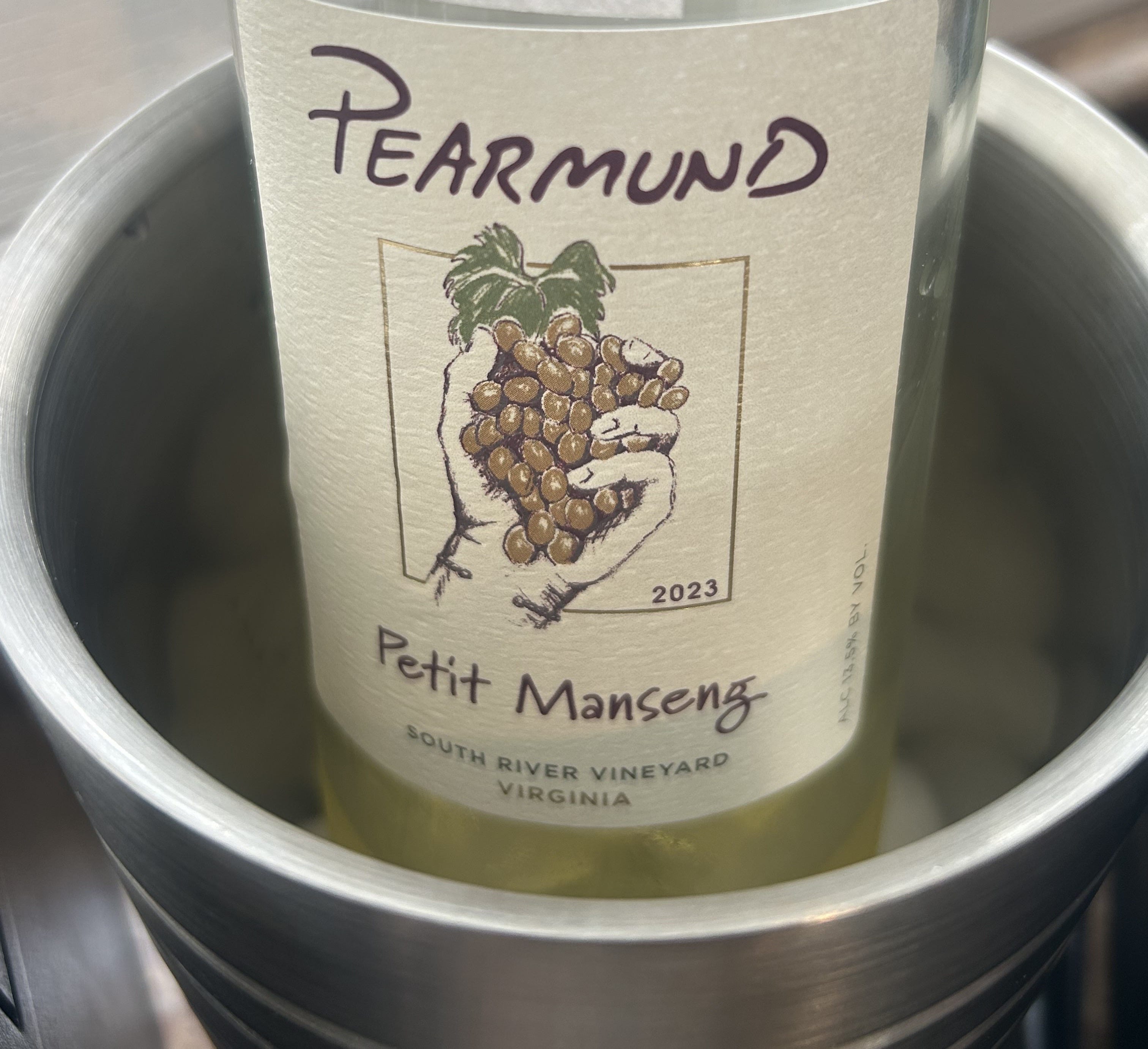
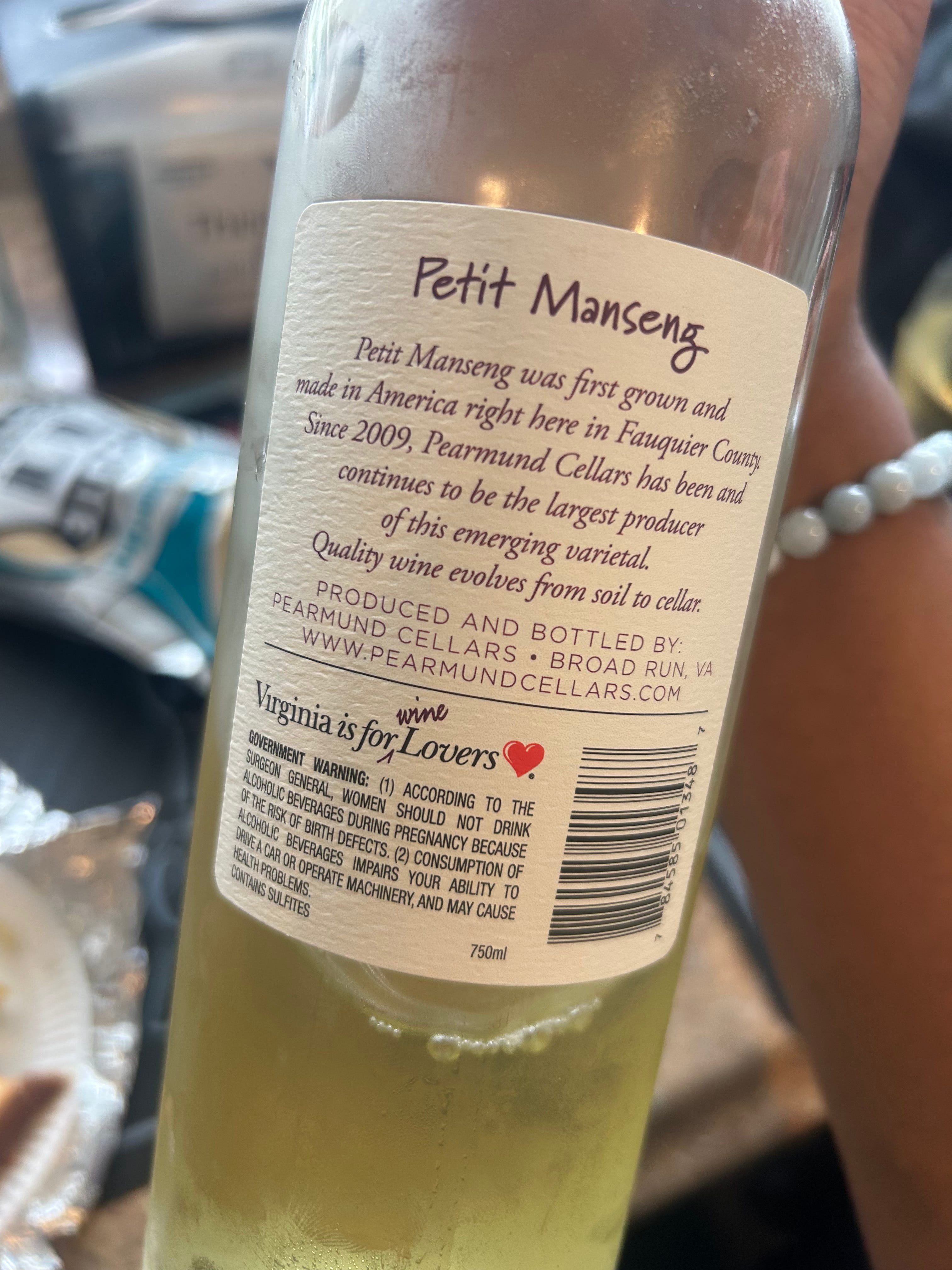
Filing out of church, my mom and I have our own daily work of living to do. But first, lunch. Two blocks down, near Main Street, there’s a hole in the wall counter that my mom says had been a fave of hers and Mrs. Garner’s during weekend hangs. “Paulette quenched her pain with poetry, just like I quench my pain with prayer,” my mom sighs, and then continues to remember. Over a bottle of petit manseng, Mami tells me about all the ways her friend Paulette had made heaven on Earth through 24 years of their friendship. This time, I pay attention.
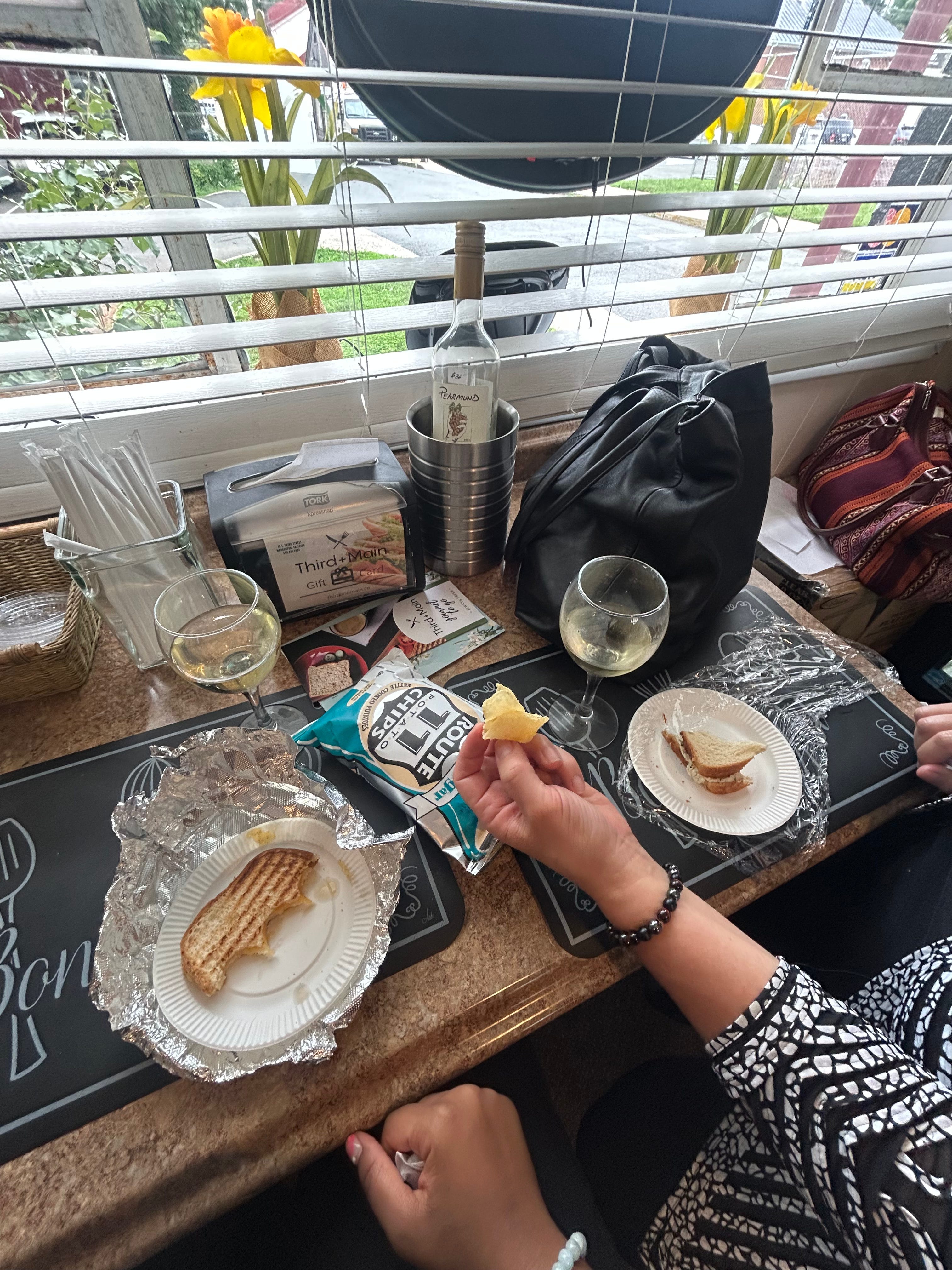
It is said (marketed) that outside of the Jurançon region, Virginia is the second largest producer of petit manseng. This particular vintage varietal was dry with a balanced amount of acidity to cut through the fattiness of our sandwiches and the saltiness of our chips. Refreshing, with light aromatics of apple and pear, easy drinking without being too simple. Just right.